⚠️
About This Content
These tips are automatically generated by an AI language model via Ollama. While the content aims to be helpful, it may contain errors or outdated information. Always verify advice against reliable sources before applying it to your projects.
All images are original photographs taken by the project creator from actual scale models. However, the card images may not necessarily illustrate the specific tip on that card — they are selected randomly from the available photo collection for visual variety.
1
Airbrushing Vallejo Model Air — Pressure Matters
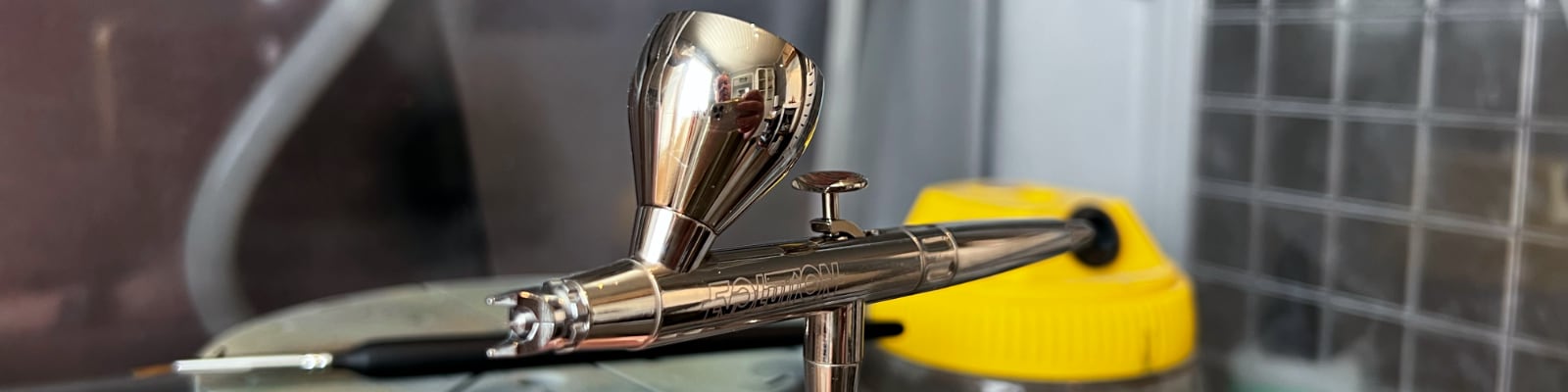
Vallejo Model Air paints are thin and meant for airbrushing straight from the bottle. For best results, airbrush at 1.5-2.0 bar pressure using an Iwata HP-C+ or equivalent airbrush with a fine needle (0.2-0.3mm). Start with a light coat to avoid runs. Test paint consistency on a white plastic spoon — it should spread evenly, not spatter or form spider webs.
🔍 Search for more
2
Base Coat Technique with Vallejo Model Color
For a smooth base coat, first apply Vallejo Primer using an airbrush at 1.5 bar pressure. Once dry, apply Vallejo Model Color thinned 1:1 with Vallejo Airbrush Thinner, using an Iwata HP-C+ airbrush at 1.0-1.5 bar pressure. Spray multiple light coats, allowing each to dry completely before applying the next.
🔍 Search for more
3
Camouflage Masking with Eduard PE Masks
Eduard PE Masks provide precise coverage for complex camouflage schemes. Apply Softer Image Film Remover to the model's surface before applying masks. Press masks firmly in place, ensuring no overlap. Spray Vallejo Model Color thinned 1:1 through masks using an Iwata HP-C+ at 1.5 bar pressure. Allow paint to dry completely before removing masks.
🔍 Search for more
4
Applying AK Interactive Washes — Less is More
AK Interactive Washes create depth and shadows. Mix washes with Vallejo Airbrush Thinner at a 2:1 ratio (2 parts thinner to 1 part wash). Apply using a flat, synthetic brush, working wash into panel lines and crevices. Allow to dry naturally, then remove excess with a damp cloth. For subtle effects, apply washes selectively, focusing on lower panels and areas where light would naturally fall.
🔍 Search for more
5
Chipping with Sponge Technique — Realistic Wear
For realistic chipping, use a damp, natural sea sponge (not synthetic). Apply Vallejo Model Color thinned 1:1 to the sponge using a brush. Gently dab paint onto the model's surface, focusing on areas prone to wear like corners and raised edges. Use varying pressures to create random, irregular chips. Allow paint to dry completely before applying decals.
🔍 Search for more